2015program

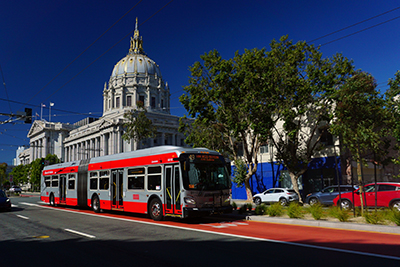
Photo by: Howard Wong

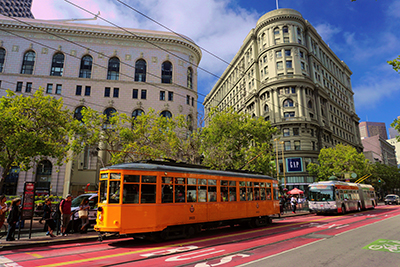
Photo by: Howard Wong

SaveMUNI is an independent transit advocacy organization whose mission is to improve public transit and reduce congestion in San Francisco

SAVE MUNI MEETINGS

SaveMUNI meets on the third Monday of every month.  Our next meeting is on Monday, October 19, 2026 at 5:30 over ZOOM.  Please contact: bobfeinbaum@gmail.com for ZOOM link

SaveMUNI Event was a Roaring Success

SaveMUNI’s Future of Transportation event took place on September 10, 2026 at 111 Minna Gallery in downtown San Francisco.  Joshua Schank, former head of innovation at Los Angeles Metro, Alicia John-Baptiste, Mayor Lurie’s chief of infrastructure and Bob Feinbaum, president of SaveMUNI discussed where transit might find itself in fifty years on the nation’s 300th anniversary.  Afterwards members and guests engaged in a thoughtful conversation with the speakers.


SaveMUNI then presented certificates of recognition to five Transit Heroes:

  • Jerry Cauthen, the first president of SaveMUNI
  • Dylan Fabris, outreach director for SanFrancisco Transit Riders
  • Ed Mason for his efforts to make commuter buses obey city rules
  • Muni Operators for all they do to provide excellent service
  • Sue Vaughan for her work on the SFMTA Citizens Advisory Council

For the rest of the evening members and guests enjoyed refreshments and listened to musical entertainment from Glenn Rogers and Robin Krop.  A good time was had by all !


SaveMUNI supports transit tax measures, urges strong, independent oversight of expenditures


SaveMUNI, San Francisco’s independent transit advocacy organization, supports both transit tax measures on the November ballot. Connect Bay Area (the regional measure) and Stronger Muni for All (the San Francisco measure) will assure stable funding for transit operations so that Bay Area transit agencies can continue and even increase levels of service.

However SaveMUNI believes that Bay Area transit agencies must operate more efficiently. We are heartened to note that the regional measure imposes “strict oversight and transparency to ensure that every dollar is spent efficiently” as well as a “citizens oversight committee to monitor spending, publish reports and ensure compliance” Similarly, the San Francisco measure requires an independent consultant to identify cost saving measures and action strategies to “deliver increased and improved service” and a citizens group to review and report on revenues and expenditures from the tax.

In the past we have seen oversight of transportation revenue measures fail for a variety of reasons. Therefore we recommend that the oversight boards required under the transit tax measures follow the following guidelines:

(1) No member of the either Board should have a connection with any transit operator. Instead appointees should come exclusively from citizen groups and transit experts

(2) To ensure that the oversight committees can do their jobs, board members should be compensated for their service and allowed to hire staff and consultants to aid them in fulfilling their responsibilities.

(3) The oversight committees should hold well publicized hearings at least twice a year in order to hear concerns from the public and report back about the effectiveness of the expenditures from the taxes.

(4) The oversight committees should each select an Inspector General, who has powers of subpoena, to lead investigations into any agency or project funded in whole or in part under these tax measures.

(5) Recommendations from the oversight committees should be considered by agencies, transit operators and other government officials with the same seriousness as those coming from civil grand juries.

We urge advocates for the transit tax measures to join with SaveMUNI in supporting these recommendations for effective, independent oversight. And we urge the appointing authorities to adopt these proposals for appointment and functioning of the required oversight committees.


Air Resources Board Cuts Back Grants to Transit

On June 4 the California Air Resources Board announced that it is changing its grant allocations under its Cap and Invest program to eliminate some $ 600 million that was slated to go to transit agencies around the state of California.  Of that amount $ 200 million was for Muni projects such as free and reduced fares for students and seniors, upgrading the train control system and speed and reliability improvements on the N and K lines.  Transit advocates are hoping that the state legislature might overturn the decision.


SFMTA Receives State Loan

The State recently approved a $ 590 million loan to Bay Area transit agencies to tide them over until the expected passage of the regional sales tax measure in November.  Of that amount, Muni is expected to receive about $ 200 million. The state loan will allow Muni and other transit agencies to maintain service levels until June 2027 when funds from the sales tax will become available.

The loan will have to be repaid over a 12 year period at a rate linked to the state’s Surplus Money Investment Fund., However according to the terms,  the first two years will require only payment of interest.  After that payment will apparently come from Muni’s operating budget.


SaveMUNI supports adding bus shelters

SaveMUNI urges SFMTA to provide bus shelters and seating at all bus and rail stops.  This is especially important for senior and disabled riders.  Members and friends please tell us of any stops that need shelters and we will provide that information to SFMTA for action.


Brent Jones, SFMTA Director of Transit Responds to SaveMUNI Questions

SaveMUNI Questions Concerning Muni
Operations
Date: August 20, 2025
1) Muni Metro (MM) recently experienced a significant service breakdown during the AM
peak. Are you confident that you have the funding and staff capability to maintain MM in a state
of good repair ?
The service disruption you described was related to a software issue. The existing Automatic
Train Control System was rebooted and the system experienced residual delays as each train
was manually reconnected to the system.
As you indicated, modernizing Muni Metro’s train control is the most critical long-term
investment to improve Metro reliability, safety and service – making Metro fast, frequent,
reliable and safe. The good news is that work is already underway to do just that.
The Train Control Upgrade Project will replace and upgrade the existing Automatic Train

Control System in the Muni Metro subway with a modern, state-of-the-art Communications-
Based Train Control (CBTC) system that will extend citywide. Modern technology will also

give us more bandwidth and sophisticated capabilities to do even more to improve Muni
Metro.
We expect to begin installing the new train control system in 2026. Complete installation
systemwide is expected between 2032 and 2034. The SFMTA approved funding for this
project in our FY2025-2029 Capital Improvement Plan (CIP). We are also pursuing regional,
state and federal grants to augment funding for TCUP and other maintenance and state of
good repair projects in the CIP.

While work is underway to update our Automatic Train Control System to Communications-
Based Train Control, our Muni Metro operations team is working diligently to ensure smooth

day-to-day operations of Muni Metro and reduce customer delays. Since July 2019, moderate
delays are down 66% and long delays are down 61%.
2) The Cable Cars offer tourists a unique San Francisco experience and provide a source of
revenue for Muni. But at least half the scheduled fleet of cable cars are on dwell at the four
terminals. What measures are being taken to improve the throughput of the cable car system ?
You are absolutely right. Within Operations, we’re actively working on our service
management strategies to decrease the time needed for cable cars turn around at the
terminals. We’re also getting ready to pilot a project to collect performance data, which we
currently don’t have.

This lack of performance data makes it difficult to pinpoint key issues, evaluate service
delivery or implement Key Performance Indicators (KPIs) for operators.
3) Since the L Metro line has been reinstated, there are now five trunk lines in the tunnel. Do
you believe that the existing service provides enough capacity, and if not, what measures are you
undertaking ?
Currently, Metro ridership is at about 60% of pre-pandemic levels. As a result, we’ve been
able to run less Metro service and still meet demand. This has also reduced subway
congestion and delays. Muni Metro ridership has been growing each year since the
pandemic. Now we are starting to see overcrowding again, particularly on the N Judah.
In the immediate term, our service planning team regularly reviews crowding data. They
adjust to service frequencies to minimize crowding within existing operational resources.
In the medium to long term, the Muni Metro Capacity Study is focused on ensuring there will
be enough capacity for future riders. The Study has developed multiple scenarios of future
ridership forecasts and developed draft recommendations on what capital upgrades would be
needed to serve future demand. Stay tuned for more information about the Study’s draft
recommendations in September. The Study team is also available to join a SaveMUNI
meeting in September or October to share more and receive feedback.

4) When the fleet of articulated trolley coaches will be unable to use Potrero due to the
reconstruction, will other fleets be substituted on those lines now serviced out of that yard ?
Currently service planning is underway for the planning related to the reconstruction of
Potrero Yard. The Potrero Yard Modernization Project will replace our obsolete, century-old
bus yard with a modern, efficient bus maintenance and storage facility, equipped to serve the
SFMTA as it transitions to an all-electric fleet.
As we rebuild this facility, we hope to be able to accommodate some trolley coaches at other
Muni yards. We will also likely substitute some service with other types of vehicles. As these
plans evolve, we look forward to collaborating with our labor partners to bring them to fruition.
5) Muni initiated service changes earlier this year including truncating several lines. Are you
planning another round of service changes and reductions in the next twelve months ?
We know that Muni service is a lifeline for many. Quality public transportation is also key to
San Francisco achieving its climate, equity and economic recovery goals. So, we don’t take
making changes to Muni service lightly. Before we truncated service in June, we were facing
a $50 million budget shortfall in the current budget because parking revenue, transit revenue
and General Fund reimbursements are lower than we’d expected. This is largely a result of
the pandemic and its economic impact. As we were able to address the budget shortfall in
June with our service changes, we do not expect to make further service reductions in the
next year.

Looking ahead, we are navigating a $322 million budget deficit that starts next year in July
2026. To bridge this gap, we are constantly looking for ways to reduce spending and be even
more efficient.
To gather public input, identify solutions and prioritize options to address the funding gap, the
SFMTA and San Francisco Controller’s Office convened the Muni Funding Working Group in
September 2024. It considered several options in these categories to both decrease costs
and increase revenue:
• Efficiency Improvements: streamline systems and processes to further decrease
operating costs.
• Service Cuts: reduce service and/or subsidies to decrease operating costs.
• Revenue Enhancements: increase fees, revenue, or taxes to increase overall revenue.
• Service Enhancements: enhance services to win voter support for new revenue.
The guidance from the Muni Funding Working Group was to go big at the ballot and raise new
revenue instead of making cuts to transit service.
We also worked collaboratively with the Metropolitan Transportation Commission, state
legislators and other Bay Area transit agencies on a new regional revenue measure for the
Nov. 2026 ballot.
6) In reference to headway management – hill and owl lines are now at 50 % adherence.
Reference was made to “re imagining hill lines” for the GSU in February. What does “re
imagining” mean ?
When we talk about “reimagining” our hill lines, we are referring to a comprehensive
reassessment of our travel times. Our Owl and Connector routes operate on a schedule, and
we are working to address issues related to vehicles running early.
The goal of this “reimagining” is to make a round of travel time adjustments. By doing so, we
aim to improve our overall on-time performance and bring the headway adherence back up
from the current 50%. This process is crucial for ensuring our service is reliable and meets
the needs of our riders.
7) Is Muni considering upgrading its headway management based on Seattle Metro’s
capability ? If not what remedy for headway management shortcomings is SFMTA pursuing ?
We spoke with King County about our experiences with headway management, and they
confirmed they’re facing similar challenges with technological limitations. However, as part of
our upcoming CAD/AVL (Computer-Aided Dispatch/Automatic Vehicle Location) upgrade, we
will receive a host of new features that will finally allow us to manage our terminals based on
headways.
This new system provides a suite of upgrades designed to enhance our service management.
It will give us the ability to calculate and manage terminal departures based on headway, not

just schedules. It will also provide dynamic headway management, which is a crucial
capability that was lacking in our previous system. The system will give us live data on vehicle
position, including whether a vehicle is early, late, or on time, and will provide an audible alert
when a vehicle is running early to help prevent bunching.
It will also include features for customer information, allowing us to determine the predicted
departure time from a terminal based on headway. Furthermore, the system will provide us
with real-time information about gaps and bunches in our service, and the capability to adjust
and manage route spacing dynamically. The new CAD/AVL bundle will give us the necessary
tools to proactively manage our fleet and improve on-time performance.
8) In reference to the stated Muni goal of financially efficient operations, has any study been
conducted to consider autonomous vehicle applications on Muni connector lines ?
Muni now has one of the most diverse transit fleets in the world and is also the cleanest
multimodal fleet in California. Our state-of-the-art fleet of electric trolley and hybrid buses
reduce or eliminate greenhouse gas emissions, helping San Francisco lead the way to a
sustainable future.
San Francisco is the second major city in the US where travelers who can afford them have
access to commercial autonomous vehicle (AV) ride-hail. That said, AV transit vehicles are
still in early stages of development and SFMTA has no plans to use autonomous


SaveMUNI proposes shared sacrifice to support Muni service

The SFMTA must tighten its belt to keep buses and streetcars running while adding new sources of financial support.  Here is SaveMUNI’s proposal for doing just that…..


SaveMUNI Plan to Meet SFMTA Funding Gap

Date: June 20, 2025

SaveMuni recognizes that the SFMTA faces serious financial issues in the coming years. But it must not cut transit service in response to budget shortfalls, Instead we propose a strategy of shared sacrifice to meet the challenges ahead.

We urge the SFMTA to analyze each of our recommendations for cutting expenses and raising revenue. By showing a serious commitment to closing its budget gap, voters are likely to be much more receptive to transit tax measures on the 2026 ballot.

# 1 – SFMTA must commit to focusing its entire resources onto providing transit services in an efficient manner.

ACTION – Cut the SFMTA budget by 12 % from non-Muni operations

Potential savings: $ 180 million.

HOW –

a) Increase efficiency through red lanes, better scheduling, transit preferential signals and signal timing

b) Eliminate positions for planners and project managers working on projects unlikely to be funded in the near term. Use outside consultants only when absolutely necessary.

c) Eliminate street improvement projects unless they improve Muni service or can be proven to improve safety.

d) Evaluate the cost saving opportunities from consolidating vehicle storage and maintenance facilities

e) Redesign paratransit to reduce costs, ensure consistently excellent service and improve customer satisfaction. Look for funding support from agencies that provide disability services.

f) Reduce or eliminate service on the Central Subway at least until the fiscal crisis has ended and hold contractors liable for defects

g) Negotiate agreements with other bus operators to pick up riders at San Francisco stops to augment Muni service at no additional cost to the SFMTA

h) Adopt a more aggressive stance to shifting capital funds to Muni operations

I) Consider the cost implications of switching lightly used routes to shuttles or to on-demand service.

j) Lower cost of living adjustments, especially for employees with salaries over $ 150,000

k) Look for other opportunities to eliminate positions not related to providing Muni service in accordance with a thorough outside management audit.

# 2 – SFMTA must look for additional revenue

ACTION – Increase revenue from fares, parking and other sources.

Potential revenue: $ 40 million

HOW _

a) Eliminate discounted fares for higher income seniors and school aged riders. Look for support for free fares for school kids from the San Francisco Unified School District.

b) Vigorously enforce fare collection and rider behavior standards on buses and trains and at stations and bus stops. Look for support for homeless riders from the Department of Homeless Services.

c) Increase ridership resulting in increased fare revenue

d) Increase parking revenue through better enforcement and marketing of the downtown facilities. Adopt a discounted monthly parking fee for the Sutter-Stockton garage and for other facilities where nearby residents can make use of empty spaces

e) Plan for substantial increases in fines from daylighting and red light camera citations.

f) Increase revenue from advertising on vehicles and concessions at stations and bus stops

g) Increase fees on developers when they receive benefits from projects that claim to be transit dependent.

h) Institute a license fees for scooters and electric bicycles to help pay for maintaining bike lanes and related infrastructure

I) Restart efforts to institute congestion fees to provide funds for transit and reduce traffic for

buses

j) Explore selling naming rights to SFMTA properties

# 3 – Tax new modes of transportation to support Muni service

ACTION – Tax Avs, TNCs and Shuttle buses.

Revenue potential: $ 30 million

HOW

a) Revive Proposition L which created an additional tax on Autonomous Vehicles (Avs) and Transportation Network Companies (TNCs)

b) Charge additional fees for shuttle buses that use Muni bus stops or neighborhood parking spaces

# 4 – Develop a public private partnership to help pay for Muni service

ACTION – Create a non-profit, funded by downtown and tourist businesses to support the cable cars and historic streetcars

Revenue potential: $25 million

# 5 – Negotiate more flexible labor practices

ACTION – Meet and confer with labor unions to affect mutually beneficial solutions

Savings potential: $ 25 million

a) Allow existing bus operators to work part time and provide part time work for new operators

b) Change work rules to foster more efficient operations throughout the SFMTA, with a focus on reducing overtime

c) Lower negotiated cost of living adjustments and benefits

# 6 – Longer term actions to reduce expenses

ACTION – Consolidate shared functions (such as purchasing, driver training, human relations, information technology) under a regional authority to reduce costs and stop duplication. Savings potential: Unknown

# 7 – Approval of a regional sales tax to support transit

ACTION – 50 % plus one vote by the voters of San Francisco, Alameda and Contra Costa counties in November 2026.

Revenue potential: $ 80 million plus


Microtransit Receives a Boost

Microtransit updates from TriMet, SFMTA, LADOT   https://www.masstransitmag.com/alt-mobility/shared-mobility/article/55298117/microtransit-updates-from-trimet-sfmta-ladot?o_eid=7737B9233056H5R&rdx.ident

SFMTA:  Community Involvement Drives Bayview Shuttle Updates: New Hours and Service Zone

https://www.sfmta.com/blog/community-involvement-drives-bayview-shuttle-updates-new-hours-and-service-zone

SFCTA:  District 4 Community Shuttle Study:  https://www.sfcta.org/blogs/share-your-input-and-learn-more-district-4-community-shuttle-virtual-town-hall?utm_source=Transportation+Authority+Communications&utm_campaign=a57bb83fe6-EMAIL_CAMPAIGN_2025_06_17_05_46&utm_medium=email&utm_term=0_-a57bb83fe6-55566493

*   *   *   *   *   *   *   *  

Howard Wong


SFMTA Will Receive State Funds


IN THE NEWS:  Muni fiscal crisis may be delayed into 2027—if the Governor keeps the Legislature’s budget proposal, which includes a $750 million no-interest loan to Bay Area transit agencies.  With signature-gathering for an initiative measure, which requires 50%+1 to pass, the November 2026d election would include a Regional Transportation Funding Measure (sales tax for 10-15 years).  ALSO, microtransit is making great strides—great potential for paratransit and underserved areas. .  KQED:  California Lawmakers’ Plan Would Help Bay Area Transit Avoid Fiscal Disaster — for Now  https://www.kqed.org/news/12043556/california-lawmakers-plan-would-help-bay-area-transit-avoid-fiscal-disaster-for-now

Howard Wong